September 27, 2026 – The Eighteenth Sunday after Pentecost
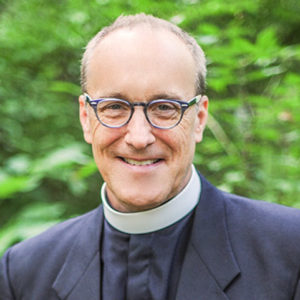
The Rev. Cal Calhoun
“Is the Lord among us, or not?”
In the Name of God: Father, Son and Holy Spirit. Amen.
In our Old Testament readings the last several weeks we have been journeying through the Book of Exodus. Three weeks ago we heard about the Passover. The instructions the Israelites received for preparing the Passover lamb and putting the blood of the lamb on the doorposts so God would know to “passover” that house with the final plague. Then we heard about the Israelites crossing the Red Sea and the Egyptian army not crossing the Red Sea. These two stories represent much of the salvation narrative for our Jewish ancestors in the faith. God passing over their homes with the plague that kills the first born of both man and animal that ultimately results in Pharaoh letting God’s people go. Once the Israelites get start moving, Pharaoh changes his mind and sends the army after them. The Israelites are delivered from the Egyptian army by the parting of the Red Sea. These stories are central to the Jewish people understanding themselves as God’s chosen people. We often hear these readings around Easter, when we celebrate our own salvation story, we hear again the salvation stories of our Jewish ancestors in the faith.
But those stories of salvation here in Exodus, they are short lived aren’t they. The Israelites go from salvation to wilderness really quickly. Wilderness both literally and figuratively, both physically and spiritually. Last week the Israelites were complaining to Moses about not having enough to eat. God replies with quail and manna from heaven. This week they are dying of thirst. Our reading this week ends with the line: “Is the Lord among us, or not?”
I think these series of readings are a wonderful metaphor for our lives and our relationship with God. We have those times when we feel connected and supported in God’s love. When we are sure that God is with us. And then there are the times when we hunger and thirst for God. When we don’t feel God’s presence in the same meaningful way we once did – or the way others describe. We might intellectually know that God is always with us, but we must face the reality that we don’t always feel God’s presence. I think this is true for just about every one of us. It was true for 500 years ago for John of the Cross when he wrote Dark Night of the Soul. He was one of the first to get honest about his feeling that God was not present to him in the way or ways that God used to be present. We know now that Mother Teresa, too, experienced the loss of what was once a closeness to God.
We know that the practice of prayer, the showing up, is as important as the feeling of closeness, maybe more so. Showing up on Sunday. Showing up in your daily practice of prayer. In the Episcopal Church we are much more a church of Orthopraxy, than we are a church of Orthodoxy. Orthodoxy is right belief. But truth be told, we don’t have a list of things we say you have to believe to belong. We are much more about orthopraxy, right practice. This is how we worship, together. If how we worship works for you, then make it a practice and you belong. Mother Teresa, even when the practice was no longer bringing her close to God, she showed up. A good spiritual director will help you change things up, if that is needed. But you show up, you keep showing up.
I think this is central to what Jesus is getting at with the chief priest and the elders. He shares the parable about the two sons. The father goes to the first and says, ‘Son, go and work in the vineyard today.’ He answered, ‘I will not’; but later he changed his mind and went. The father went to the second and said the same; and he answered, ‘I go, sir’; but he did not go. Which of the two did the will of his father?” Or he might have asked, “Which one of the two showed up?” The chief priests and the elders replied, “The first.” Jesus points out to them that the tax collectors and the prostitutes are like the first son, who by their life choices tell God “no, I’m not going.” But, by listening and following John the Baptizer, confessing their sins and being cleansed in baptism, they find their way into the vineyard. But the chief priests and the elders are paying God lip service. Saying, “I go, sir,” but, in fact, by not being true to the word and mind of God, they are not practicing what is required. They are more concerned with the purity laws, and being the Sabbath police, than they are concerned with loving their neighbors. They weren’t showing up, or they weren’t showing up in the right way.
Is God among us, or not? I won’t ask for a show of hands. But if I did, I would hope a good number of you would raise your hands for “Yes, the Lord is among us.” And I would also want you to raise your hand “no” if that is honest. And if you are a “no,” good for you for showing up. For showing up, even if you are not feeling it. Jesus is talking to you today. And Jesus is saying that you may indeed be headed into the Kingdom of God ahead of some of those quite sure of their own righteousness.
Wherever you find yourself on your journey with God, may you keep showing up, and may God find new and fresh ways to remind you what a beloved child of God you are. Amen.
Year A – The Eighteenth Sunday after Pentecost – September 27, 2026 – The Rev. Cal Calhoun