August 23, 2026 – The Thirteenth Sunday after Pentecost
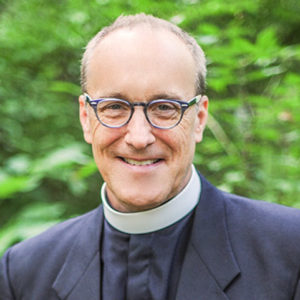
The Rev. Cal Calhoun
Jesus said to the disciples: “But who do you say that I am?”
In the Name of God: Father, Son and Holy Spirit. Amen.
In our Old Testament reading, we hear that there is a new king in Egypt, a new Pharaoh, who did not know Joseph, and presumably did not know Joseph’s people, the Hebrews. And this new Pharaoh acts out of fear. Fear of a people who are different. A people who, if all the stars aligned, might present a threat. So Pharaoh goes first to the midwives Shiphrah and Puah, to get them to do the dirty work. But they are able to sidestep that. So then Pharaoh proclaims that Hebrews’ boy babies are to be thrown into the Nile.
People do strange and terrible things when they act out of fear.
One of the surprising things to me, at least in terms of what we usually get from Scripture, is that all the heroes in this story are women. Scripture doesn’t give us enough heroes who are women. And I think the most surprising hero today is Pharaoh’s daughter.
We might be tempted to say she must not have gotten dad’s memo about the Hebrew boys? But she knows immediately that this boy in the basket must be one of the Hebrews, and not only does she make arrangements for the boy to live, she brings him into her own household! Makes me think she probably didn’t live in the same household as her father? The daughter of Pharaoh acts out of compassion, not out of fear.
God, especially God as represented in Jesus Christ, is a God of humble love. Theologian Ilia Delio highlights how Francis of Assisi encountered God: Following the footprints of Jesus, Francis found the God of humble love not among the popular and the proud, the arrogant and the rich or those who “stand out” in society, but among the ordinary, the forgotten, the poor, the sick and the marginalized.1 If those are people that we fear, we will be more likely to have the tendency blame them for being who and what they are. We will even sometimes accuse them of being responsible for the ills and problems of society. Blame the victim, as it were. This is kind of thing that happens when we act out of fear.
The daughter of Pharaoh, and the midwives Shiphrah and Puah don’t act out of fear. They act out of compassion.
Jesus said to the disciples: “But who do you say that I am?”
We know the “right” answer to that question. Peter gives us the right answer: You are the Messiah, the Son of the living God. But what does that mean? Who is the Jesus that we are to follow?
What we do know about Jesus is that Jesus doesn’t act out of fear. Jesus acts out of compassion. He sees those who are suffering, those excluded, those who are marginalized and hated by the society around them. He sees them and he reaches out to make their situation better. It seems to me that if we are to claim to be followers of Jesus, it is clear how we are to act towards the other, the marginalized, those kicked to the curb by society.
Paul knows this truth about our human tendencies. Our tendency to blame the victim. Our tendency to find a scapegoat. He tells the church in Rome “not to think of yourself more highly than you ought to think.” That sounds a bit like, “there but for the grace of God, go I.” Except, when you can say that, you are more likely to be drawn to compassion than to fear.
Is there nothing to fear? The reality of our lives is that there are things, realities, for which we could rationally fear. I suppose that list starts with death. Because it is going to happen. And we don’t know a lot about what happens when and after we die. Now we do some things to hold it off. We wear our seatbelts. We might choose a healthier diet. But sooner or later, death will come for each of us.
In our Tuesday healing service we have a litany that we pray. One of the biddings in the litany goes like this: Help us to prepare for death with confident expectation and the hope of Easter joy. Help us to prepare for death with confident expectation and the hope of Easter joy. Now, saying that isn’t going to make it all better. But the fact that I have prayed that prayer for over 20 years now, it has really helped me counter the fear and anxiety I had associated with death. I would add that to the list of responses for those who might criticize the effectiveness of saying the same prayer over and over. Our faith tells us we should anticipate Easter joy with those we love who have gone before. But the reality of that is still an unknown to us. I truly relate to some words Rick Tate shared. Rick was a parishioner here who battled thyroid cancer for 15 years before he lost that battle. Some of his poems are on the wall in Henslee Hall. Rick said once, “I’m not afraid of death, I feel really good and settled about what is next. But what happens between now and then has me a little worried.” That was a truly honest statement.
So I can’t stand here and tell you, that you have nothing to fear. But when you feel fear, recognize it for what it is. Address it. Look for its source. But when you choose to act, act out of compassion. Like the midwives, Shiphrah and Puah, like Pharaoh’s daughter, like Jesus, act out of compassion.
Jesus said to the disciples: “But who do you say that I am?” Amen.
1 The Mysticism of Francis and Clare
Incarnation: The Humility of God, Thursday, August 13, 2026,Richard Rohr’s Daily Meditation
Year A – The Thirteenth Sunday after Pentecost – August 23, 2026 – The Rev. Cal Calhoun